Europe’s Most Beautiful World Heritage Sites of UNESCO: A Grand Tour of Nature, History, and Human Genius
Introduction
Europe’s tapestry of World Heritage Sites is not merely a list of notable places; it is a narrative of our planet’s deepest beauty and humanity’s highest achievements. From the sun-drenched ruins of ancient empires to the serene, untouched valleys carved by glaciers, these sites offer a profound journey through time and artistry. To truly understand Europe is to wander these hallowed grounds. Here is an expanded exploration of its most breathtaking UNESCO treasures, divided into the realms of nature, architecture, and living cultural landscapes.
Nature’s Masterpieces: Sculpted by Time and Element
These are places where the hand of nature has performed its most spectacular work, creating vistas that humble the soul and ignite the imagination.
Plitvice Lakes National Park, Croatia
A symphony of water, stone, and forest, Plitvice is where the landscape feels truly alive. Sixteen crystalline lakes, arranged in a stepped, terraced formation, are interconnected by a labyrinth of countless waterfalls, from thunderous cascades to delicate, veil-like flows. The water, filtered through limestone and chalk, shifts in hue through a mesmerizing palette—emerald green, sapphire blue, and milky grey—depending on the mineral content and the angle of the sun. Boardwalks and trails wind through dense beech and pine forests, alive with birdsong, allowing visitors to cross directly over the shimmering waters. Each season transforms the park: lush green in summer, a blaze of autumn gold, a frozen, silent wonderland in winter, and a torrent of renewed life in spring.
The Norwegian Fjords (Geirangerfjord and Nærøyfjord), Norway
 These are not just landscapes; they are monuments to the raw, sculpting power of ancient ice. The Geirangerfjord, a sheer, deep-blue incision into the continent, is framed by precipitous cliffs soaring over 1,400 meters high. From these walls, legendary waterfalls like the “Seven Sisters” and the “Suitor” plunge in elegant, misty ribbons. The narrower, darker Nærøyfjord, with its dramatic, shadowed silences, offers a more intimate experience. Sailing these waters feels like navigating a cathedral of stone and ice, where tiny, historic farms cling impossibly to ledges, testaments to human resilience against the sublime power of nature.
The Dolomites, Italy

Rising like a petrified coral reef turned to stone, the Dolomites are a mountain range of ethereal beauty. Their unique pale dolomite rock undergoes a daily spectacle known as “enrosadira”—a breathtaking transformation where the peaks glow in shades of rose, violet, and fiery orange at sunrise and sunset. In daylight, the stark, vertical pinnacles, towering above lush alpine meadows and serene lakes, create a contrast of sublime grandeur. This is a landscape for the active soul, offering legendary hiking trails like the Alta Via, winter sports in Cortina d’Ampezzo, and year-round vistas that seem painted by a divine hand.
Lake District, United Kingdom
 More than just a beautiful place, the Lake District is the very embodiment of the Picturesque and Romantic ideal. Its beauty is one of harmony: a patchwork of serene, reflective lakes (meres and waters), gentle, sheep-dotted fells, and charming stone villages. It was this landscape that inspired the “Lake Poets”—Wordsworth, Coleridge, and Southey—to forge a new relationship with nature. Walking the shores of Windermere or gazing upon the dramatic pikes of Scafell from the tranquil waters of Derwentwater is to walk through a living poem, where every view is a composition of light, water, and land.
II. Architectural & Urban Wonders: Humanity’s Imprint in Stone
These cities and structures represent the pinnacle of human creativity, where art, faith, and power have been made manifest in enduring forms.
Historic Centre of Prague, Czech Republic
A city that seems spun from Gothic and Baroque dreams, Prague’s skyline is a silhouette of a thousand spires and copper domes. The iconic Charles Bridge, lined with statues of saints, comes alive at dawn with mist rising from the Vltava River, leading the way to the monumental Prague Castle complex. Winding cobblestone streets in the Old Town open onto the Old Town Square, dominated by the animated Astronomical Clock and the twin spires of the Týn Church. Unlike many European capitals, Prague emerged from the 20th century virtually unscathed, offering an unparalleled, immersive journey through medieval and Renaissance Europe.
Historic Centre of Florence, Italy
 The crucible of the Renaissance, Florence is an open-air museum where the very air seems charged with genius. The city’s heart is crowned by Brunelleschi’s revolutionary Duomo, with its majestic terracotta-tiled dome—a feat of engineering that defined an age. From the sculptures of Michelangelo in the Accademia and the Medici Chapels to the masterpieces of Botticelli and Leonardo in the Uffizi Gallery, the city is a living testament to the humanist explosion. The elegant Piazza della Signoria, the medieval Ponte Vecchio lined with goldsmiths, and the panoramic views from Piazzale Michelangelo weave together a tapestry of art, power, and beauty that is utterly overwhelming.
Alhambra, Generalife and Albayzín, Granada, Spain
Perched on a hill overlooking Granada, the Alhambra is the supreme expression of Islamic art and architecture in Europe. More than a palace, it is a philosophy in stone, water, and garden. The Nasrid Palaces are a wonder of intricate yesería (stucco work), honeycombed muqarnas ceilings, and serene courtyards like the Court of the Lions, where water channels represent the four rivers of Paradise. The adjacent Generalife gardens offer shaded walkways, fragrant blooms, and ingenious water features designed for sensual pleasure and contemplation. Across the Darro River, the Albayzín district’s whitewashed Moorish houses and labyrinthine streets provide the perfect, timeless vantage point to behold the fortress-palace glowing in the Andalusian sun.
Mont-Saint-Michel and its Bay, France
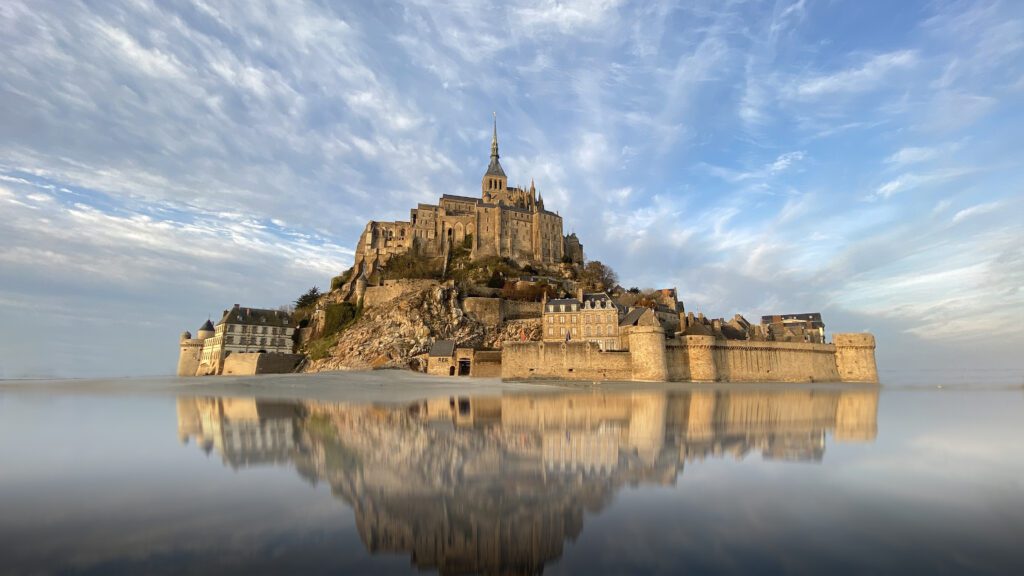 Rising from the vast, shimmering sandbanks of Normandy like a miracle of granite and faith, Mont-Saint-Michel is a vision of sublime defiance. This Gothic-style Benedictine abbey, built atop a rocky islet, becomes a mystical island kingdom at high tide, surrounded by the sea’s powerful surge. The village clings to the rock below, its narrow, winding Grande Rue leading pilgrims and visitors ever upward. The surrounding bay, with its dramatic tidal range—among the greatest in Europe—creates a constantly shifting panorama of light, water, and sand, making the mount appear to float between the earthly and the divine.
Historic Centre of Istanbul and its Unparalleled Majesty
 No grand tour of Europe’s World Heritage Sites is complete without crossing the storied Bosporus Strait, where East meets West in a city that has served as the capital of two of history’s greatest empires: the Byzantine and the Ottoman. The “Historic Areas of Istanbul” represent not just a single monument, but a layered, palimpsest of human civilization, centred on the awe-inspiring Hagia Sophia. This is a landscape where beauty is defined by spiritual grandeur, imperial power, and breathtaking artistic fusion. The genius of Istanbul’s World Heritage designation is that Hagia Sophia is understood not in isolation, but as the radiant centre of a constellation of monuments in the Sultanahmet district.
Living Cultural Landscapes: Where Humanity Meets Nature
These sites are not just places to see, but places to understand a way of life. They represent a harmonious, enduring dialogue between people and their environment.
Cinque Terre, Italy
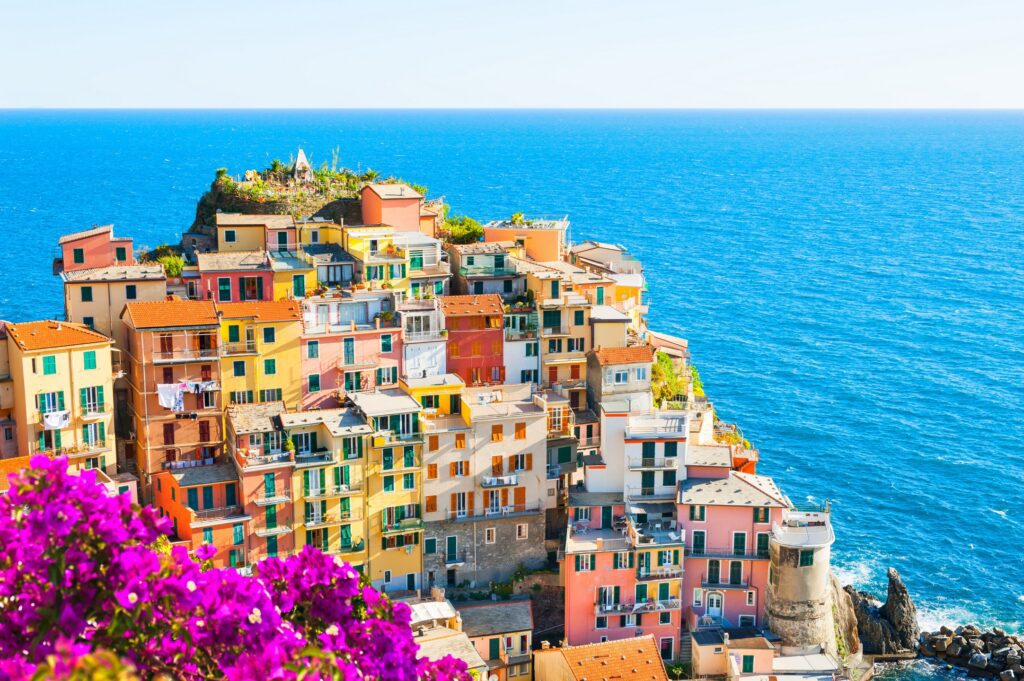
Carved by human perseverance, the Cinque Terre (Five Lands) is a rainbow-hued masterpiece of vernacular architecture and terraced agriculture. For over a millennium, generations of Ligurians have painstakingly built and maintained thousands of kilometres of dry-stone walls to create steep vineyards and olive groves that cling to the rugged cliffs. The villages—Monterosso, Vernazza, Corniglia, Manarola, and Riomaggiore—are clusters of tall, narrow, pastel-coloured houses that seem to tumble down into the turquoise Ligurian Sea. The best way to experience this fragile, beautiful symbiosis is by hiking the ancient Sentiero Azzurro (Blue Trail), which links the villages and offers heart-stopping vistas at every turn.
 / Salzkammergut Cultural Landscape, Austria
Nestled on the shores of a deep Alpine lake and overshadowed by the towering Dachstein peaks, Hallstatt is often called the “most beautiful lakeside village in the world.” Its beauty is profound and picturesque, with 18th-century timber houses reflected perfectly in the still, blue waters. But its significance runs deeper: this is the site of the world’s oldest known salt mine, a “white gold” that funded this community for over 7,000 years. The landscape is a seamless blend of natural grandeur and human history, from the prehistoric burial site high above the village to the charming Catholic church with its iconic spire, all set against a backdrop of majestic, untamed mountains.
Lavaux Vineyard Terraces, Switzerland
 Stretching for 30km along the sun-drenched northern shores of Lake Geneva, Lavaux is a stunning, man-made monument to the art of winemaking. These meticulously maintained, stone-walled terraces were built by Cistercian monks in the 11th century and represent a continuous, communal effort to harness a challenging, steep slope. The result is a breathtaking geometric pattern of vines that changes with the seasons: lush green in summer, golden in autumn. Walking through the terraces, with the sparkling lake below and the snow-capped Alps of France across the water, is to experience a landscape that is both profoundly ordered and naturally glorious, producing some of Switzerland’s finest white wines.
Meteora, Greece
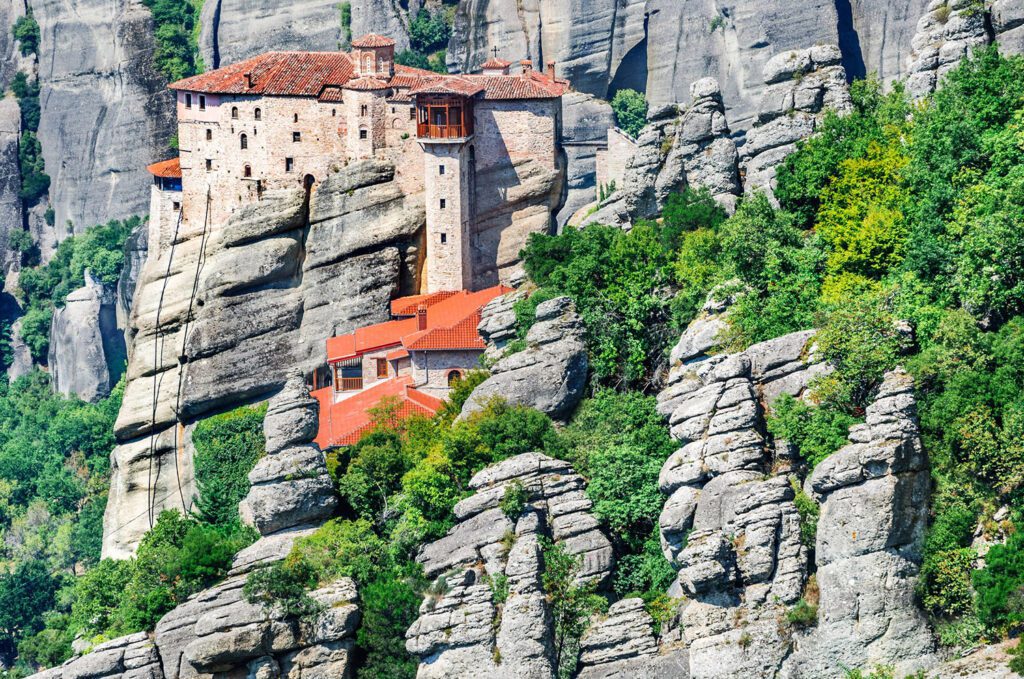
In central Greece, a forest of gigantic, smooth sandstone pillars rises from the plain, creating a scene of otherworldly majesty. From the 11th century onward, hermit monks seeking spiritual solitude climbed these seemingly inaccessible rocks. Later, they built 24 monasteries—of which six remain active—perched precariously on the summits, “suspended in the air” (meteora). The journey to these sanctuaries, once by net and rope, now by steps carved into the rock, is a pilgrimage. The view from the top, overlooking the Pineios valley and the Pindus mountains, combined with the profound silence and Byzantine frescoes within, creates an atmosphere of awe-inspiring serenity and transcendent faith.
A Journey of Deeper Discovery
Visiting these sites is more than ticking a list; it is an engagement with the soul of Europe. To fully appreciate them:
-
Seek the Quiet Moment: Arrive at opening time or stay late. Witness the Alhambra’s courtyards in the early light, or experience Mont-Saint-Michel after the day-trippers have left.
-
Embrace the Seasons: See the lavender bloom around the Dolomites in summer, the harvest colours of Lavaux in autumn, the frozen waterfalls of Plitvice in winter, or the wildflowers of Cinque Terre in spring.
-
Understand the Story: Read about the monks of Meteora, the salt miners of Hallstatt, or the Renaissance patrons of Florence before you go. Context transforms beauty into meaning.
Europe’s World Heritage is a living album of our shared heritage. Each site is a chapter in a grand, ongoing story of natural wonder and human aspiration—a story that awaits your footsteps.
Discover your perfect Europe vacation package using our convenient search and filter options, tailor-making a journey that captures Europe’s unique beauty and rich heritage just for you.