The Greatest Relics of the Roman Empire: Echoes of a World-Shaping Civilization
Introduction
From the sunbaked stones of Italy to the rain-swept frontiers of Britain and the sands of North Africa, the Roman Empire’s physical legacy spans continents. More than just ruins, these relics are powerful conduits to a world that shaped laws, languages, engineering, and culture across Europe, Africa, and the Middle East for over a millennium. They are testaments to ambition, ingenuity, and the sheer scale of Roman might. Here, we explore some of the greatest surviving relics of the cc, from the heart of Italy to its farthest-flung provinces.

The Colosseum (Rome, Italy)

The Universal Icon
No symbol of Rome is more universal than the Flavian Amphitheater. Completed in 80 AD, it was a masterstroke of engineering and social control. Capable of seating 50,000 spectators, its complex system of vaults, arches, and elevators set a standard never before seen. While the iconic parent stands in Rome, its architectural DNA was replicated across the empire, from the Amphitheatre of El Jem in Tunisia to the arena in Pula, Croatia.
The Pantheon (Rome, Italy)
The Eternal Dome
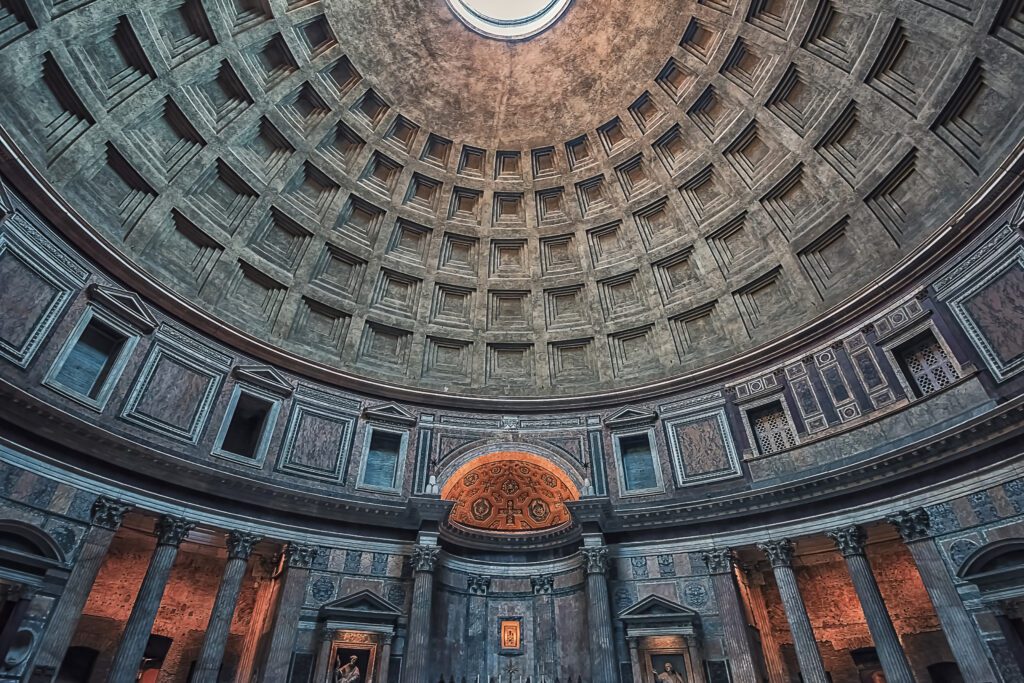
The Pantheon humbles with perfection. Its revolutionary concrete dome—43 meters in diameter—remains the world’s largest unreinforced concrete dome. The central oculus is a breathtaking architectural dare. Its survival in near-perfect condition allows us to step directly into a Roman sacred space, feeling the same light and awe as ancient visitors.
The Aqueducts: Spanning the Empire
The Arteries of Civilization
Roman engineering tamed landscapes to bring water to cities. This legacy stretches far beyond Italy:
-
Pont du Gard (France): This stunning three-tiered aqueduct bridge in Provence is a UNESCO World Heritage site and a masterpiece of elegance and proportion.
-
Aqueduct of Segovia (Spain): Perhaps the best-preserved, this two-tiered arcade of unmortared granite blocks dominated the city’s skyline and functioned until recently.
-
The Aqueduct of Carthage (Tunisia): Stretching over 80 miles from the mountains to the rejuvenated Roman capital in North Africa, it showcased Rome’s ability to rebuild and monumentalize conquered cities.
The Roman Roads: The Network of Power
“All roads lead to Rome” was a literal truth. This vast network enabled the empire’s control and cultural exchange. Their routes often form the basis of modern highways. Key examples include:
-
Via Appia (Italy): The “Queen of Roads,” linking Rome to Brindisi.
-
Watling Street (United Kingdom): A major highway running from Kent to Wales, parts of which are still followed by modern roads like the A2 and A5.
-
Via Traiana Nova (Middle East): Built by Emperor Trajan, it linked the Gulf of Aqaba through Jordan to Syria, facilitating trade and military movement in the Eastern provinces.
Pompeii & Herculaneum (Italy)
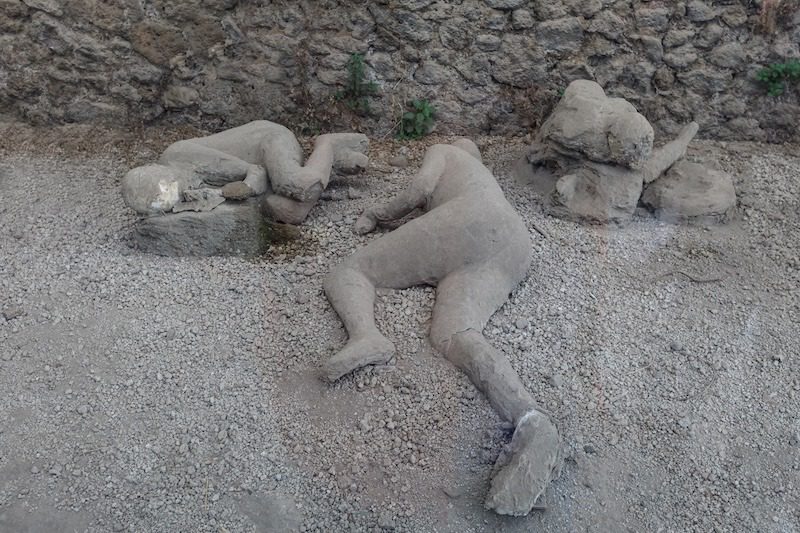
A Snapshot in Ash
Frozen by Vesuvius in 79 AD, these cities offer an unparalleled window into daily Roman life—from frescoes in wealthy villas to shop counters and graffiti. They are the poignant relic of ordinary people, making the ancient world feel immediate and real.
Frontier Defenses: The Limits of Empire
The Romans monumentalized their frontiers, building formidable barriers to mark the edge of their world.
-
Hadrian’s Wall (United Kingdom): A 73-mile stone and turf barrier across northern Britain, complete with forts and settlements. It symbolized the empire’s power and its limits.
-
The Antonine Wall (Scotland, UK): A shorter-lived but ambitious turf wall further north, marking the empire’s deepest penetration into Britain.
-
The Limes Germanicus (Germany): A complex frontier system of forts, palisades, and watchtowers along the Rhine and Danube rivers. Sites like Saalburg Fort near Frankfurt have been extensively reconstructed.
-
The Walls of Leptis Magna (Libya): In North Africa, the empire’s frontier was often a line of forts and cities. Leptis Magna, a breathtakingly preserved birthplace of Emperor Septimius Severus, showcases the opulence Rome brought to its African provinces.
Provincial Capitals & Cities
Rome exported its urban blueprint—the grid plan, the forum, the baths, the theater—across the known world.
-
Timgad (Algeria): A textbook example of Roman orthogonal town planning, founded by Trajan around 100 AD. Its striking grid layout, triumphal arch, and theater are remarkably preserved in the North African desert.
-
Jerash (Jordan): One of the best-preserved Greco-Roman provincial cities in the world, part of the Decapolis. Its colonnaded streets, oval plaza, and temples (like the Temple of Artemis) demonstrate imperial architecture adapted to local contexts.
-
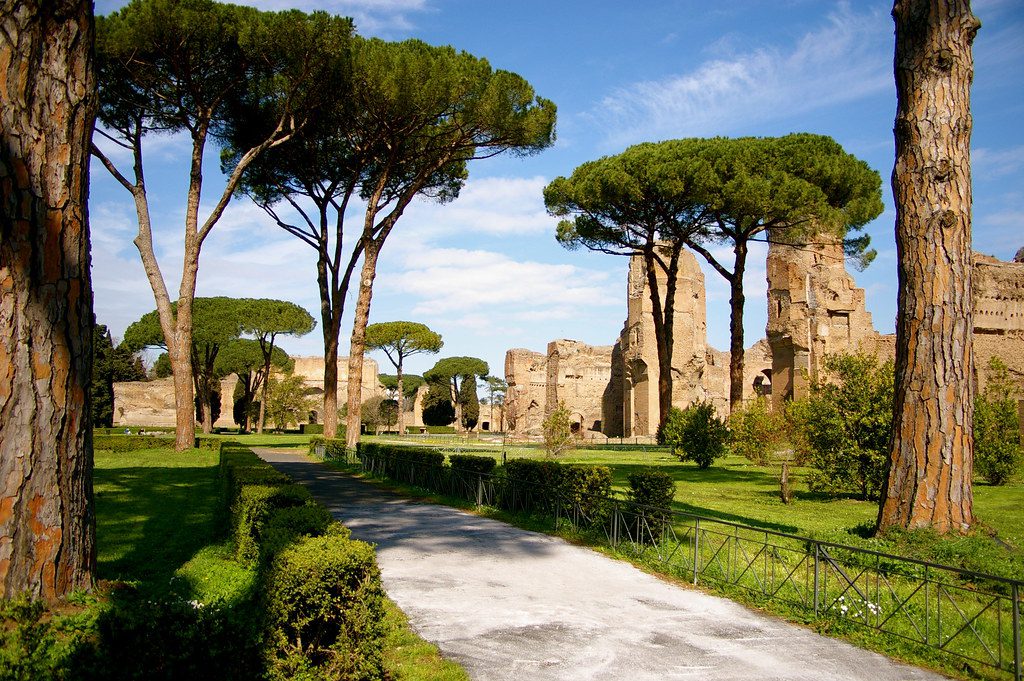
Baths of Caracalla (Rome, Italy) & Beyond: While Rome’s baths were the largest, every major city had them. The Baths of Diocletian in Rome (now housing a church and museum) and the extensive baths in Bath, England (Aquae Sulis), which grew around a sacred Celtic hot spring, show the empire-wide importance of this social ritual.
Trajan’s Column (Rome, Italy) & Trajan’s Market
A Cinematic War in Marble
Erected in 113 AD, this column’s spiral frieze is a masterpiece of narrative art, depicting the Dacian Wars. Nearby, Trajan’s Market is often considered the world’s oldest shopping mall, a multi-level complex of shops and offices showcasing Roman commercial and administrative ingenuity.
The Living Legacy Across the Map
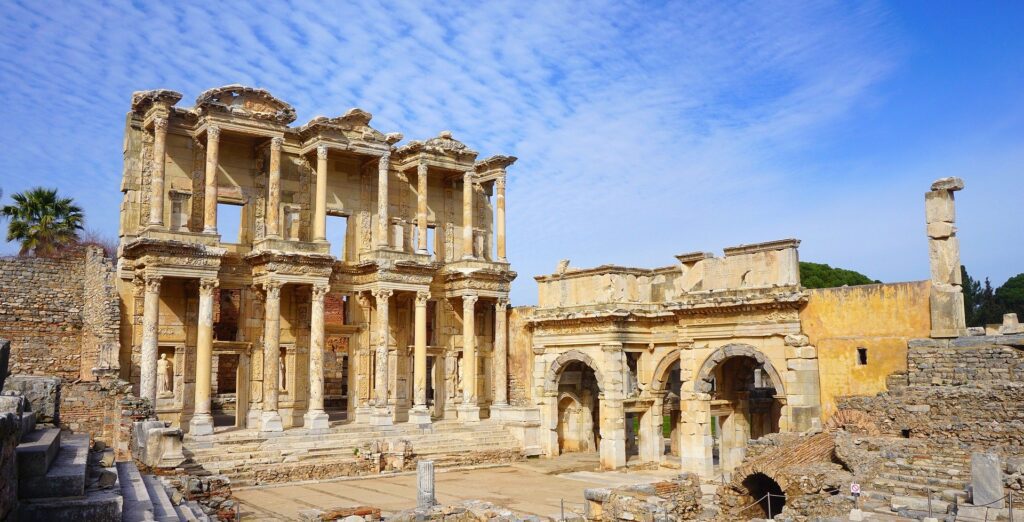
These relics are more than tourist destinations. From the theaters of Orange (France) and Bosra (Syria) to the temples of Baalbek (Lebanon) and the library of Ephesus (Turkey), the Roman imprint is a global heritage. They remind us of a world where ambition was cast in brick and stone, where law and order were laid like pavement, and where the concept of a unified, cosmopolitan world was first built on a grand, enduring scale. To walk among them, from Scotland to Jordan, is to understand the deep and lasting foundations upon which so much of our own world was built.