
The Grand Egyptian Museum: A Monumental Portal to Antiquity
Introduction
Rising like a modern pyramid from the Giza Plateau, with the timeless silhouettes of the Great Pyramids as its backdrop, the Grand Egyptian Museum (GEM) is more than a museum—it is a statement of cultural renaissance. Heralded as the world’s largest museum dedicated to a single civilization, the GEM is Egypt’s gift to the world, a breathtaking institution designed to house, protect, and narrate the epic story of ancient Egypt. After decades of planning and construction, this monumental complex near Cairo is poised to become a global epicenter of archaeology and history, offering an unparalleled journey through five millennia of pharaonic legacy.
A Short History: From Vision to Reality
The story of the Grand Egyptian Museum begins at the dawn of the 21st century. As the venerable Egyptian Museum in Tahrir Square, opened in 1902, strained under the weight of its vast collection and modern conservation needs, the Egyptian government envisioned a new, state-of-the-art home for its national treasures. In 2002, an international architectural competition was launched, attracting over 1,550 entries. The winning design, by the Dublin-based firm Heneghan Peng, was selected for its elegant, modern interpretation of ancient Egyptian geometry and its harmonious relationship with the nearby pyramids.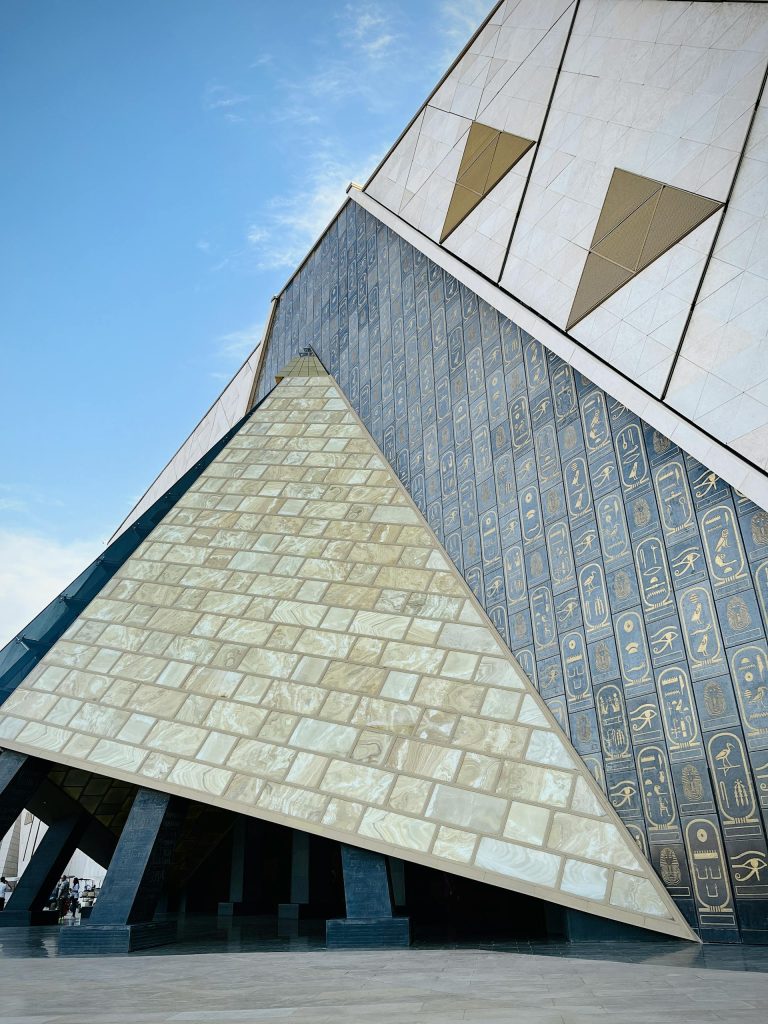
Construction commenced in 2005, but the project faced significant delays due to the 2011 revolution and funding challenges. Despite these hurdles, the project persevered, financed through a combination of Japanese loans (the Japan International Cooperation Agency being a major partner) and Egyptian resources. The meticulous process of moving over 50,000 artifacts, including the colossal statues of Ramses II and the delicate treasures of Tutankhamun, from old museums to the GEM was a historic undertaking in itself, involving teams of archaeologists, conservators, and engineers.
Finally, after years of anticipation, the GEM began a phased opening. While the grand opening to the public is still unfolding, preview visits and the opening of specific galleries have already offered a glimpse into its magnificence, signaling the completion of a dream nearly two decades in the making.
The GEM’s vast layout is designed for a chronological and thematic journey. While full access is being rolled out, here are the key sections visitors can explore.
1. The Grand Staircase & Atrium
Your visit begins in a space of staggering scale. The Grand Staircase is not merely a passage but an exhibit itself, lined with 87 colossal statues of Egyptian kings and gods, ascending towards the upper galleries. At its base sits the centerpiece: the towering, 3,200-year-old statue of Ramses II, meticulously relocated from Ramses Square in Cairo. This area is free-flowing and sets the tone for the monumental experience ahead.
2. The Tutankhamun Galleries (The Crown Jewel)
Dedicated entirely to the boy king, this is the world’s first comprehensive exhibition of Tutankhamun’s complete funerary collection—all 5,000+ artifacts gathered in one place for the first time since their discovery by Howard Carter in 1922. The galleries are a carefully choreographed narrative, leading visitors through an antechamber, burial chamber, and treasury. The climax is the serene display of his iconic golden mask and coffins in a dedicated, climate-controlled hall. This section requires a dedicated ticket and is expected to be the museum’s most sought-after experience.
3. The Main Galleries (Chronological Journey)
Spanning an area larger than many entire museums, these galleries take visitors on a chronological voyage from prehistory through the Greco-Roman period.
-
Pre-dynastic & Early Dynastic: Explore the roots of Egyptian civilization with pottery, tools, and the Narmer Palette.
-
The Old Kingdom (The Age of the Pyramids): Encounter statues of pharaohs like Khufu, Khafre, and Menkaure, whose pyramids are visible from the museum’s windows.
-
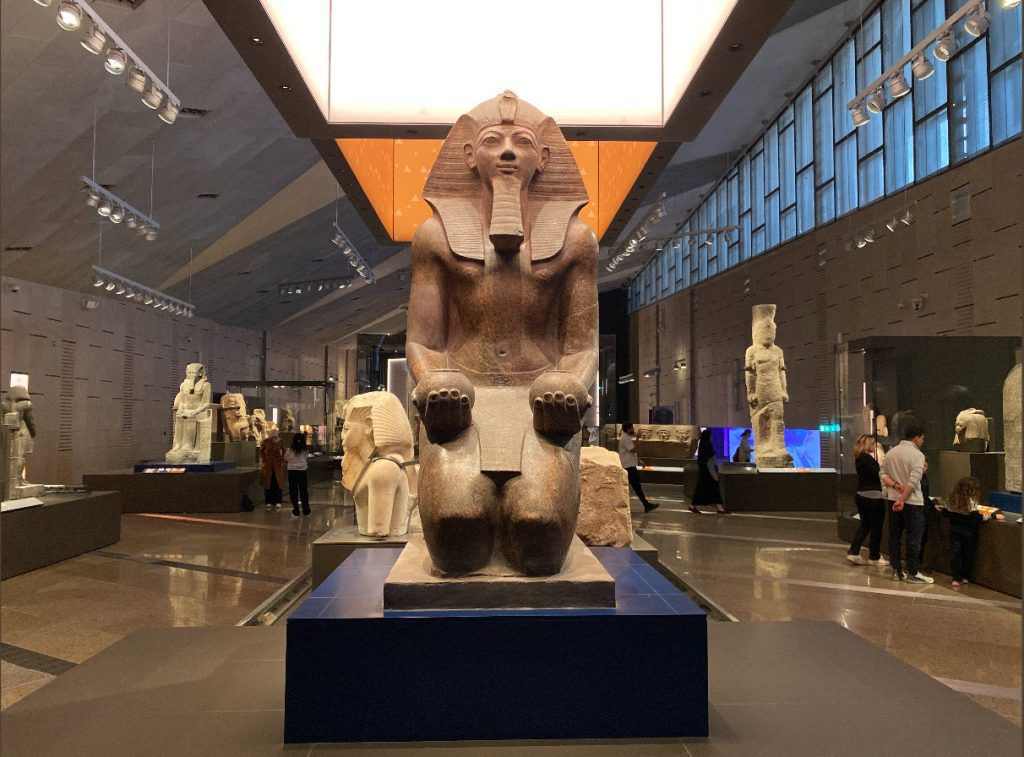
The New Kingdom (The Golden Age): Walk among the gods and pharaohs of Egypt’s imperial zenith, including breathtaking pieces from the reigns of Hatshepsut, Akhenaten, and Seti I.
4. The Conservation Center
A working heart of the museum, this state-of-the-art facility is among the largest in the Middle East. While access may be limited, viewing galleries allow the public to witness conservators at work, preserving history for future generations—a testament to the GEM’s dual role as a showcase and a guardian.
5. The Children’s Museum
A vibrant, interactive space designed to spark curiosity in young minds through games, replicas, and hands-on activities, making the ancient world accessible and engaging for families.
6. Outdoor Gardens & Vistas
The museum grounds are an extension of the experience. Lush gardens feature replicas of ancient plants, while the exterior plaza offers what may be the most stunning museum view on Earth: an uninterrupted, majestic panorama of the Giza Pyramids, just 2 kilometers away.
Practical Information for Visitors
Ticket Prices and How to Book
Pricing is structured in tiers, often quoted in Egyptian Pounds (EGP) with a significant difference for foreign visitors versus Egyptian and Arab nationals.
-
General Access Ticket (Main Galleries): Expected to be in the range of 400-600 EGP for foreign visitors. Egyptian and student discounts apply.
-
Tutankhamun Hall Ticket: This premium experience requires an additional ticket, estimated at 200-300 EGP.
-
Additional Experiences: Fees may apply for special exhibitions, the Children’s Museum, or guided virtual reality experiences.
How to Book:
-
Online (Highly Recommended): The official Grand Egyptian Museum website will be the primary platform for ticket sales. Booking online is crucial to secure entry, especially for the Tutankhamun Hall, and to avoid long queues.
-
On-Site Box Office: Tickets may be available at the museum’s entrance, but availability cannot be guaranteed, particularly during peak seasons (winter holidays, Easter).
-
Authorized Tour Operators: Most guided tours of Cairo will include pre-booked GEM tickets in their itineraries, which is a hassle-free option.
Always check the official GEM website for the most up-to-date pricing, ticketing policies, and booking procedures.
How Many Hours Do You Need to Visit?
The GEM is colossal. A meaningful visit demands a significant time investment.
-
Minimum Visit: To simply walk through the main highlights and the Grand Staircase, you need 3-4 hours.
-
Recommended Visit: For a thorough exploration of the Main Galleries and the Tutankhamun collection, with short breaks, allocate 6-8 hours.
-
The Complete Experience: For archaeology enthusiasts who wish to read descriptions, attend a guided tour, visit the children’s section (if applicable), enjoy the gardens, and dine on-site, plan for a full day (8+ hours).
It is advisable to wear comfortable shoes and plan your energy—this is a marathon of wonder, not a sprint.
Visiting Hours
While subject to final confirmation, the expected operating hours are:
-
Open Daily: 9:00 AM – 5:00 PM or 6:00 PM.
-
Extended Hours: There may be limited evening openings or special night events, particularly during Ramadan or summer months.
-
Last Entry: Typically, ticket counters close 1-2 hours before the museum’s closing time.
Best Time to Visit: Mornings (right at opening) on weekdays are generally less crowded. Avoid Fridays, Saturdays, and Egyptian public holidays if possible.
Conclusion: More Than a Museum
The Grand Egyptian Museum transcends the traditional concept of a museum. It is a cultural citadel, a research nexus, and a powerful symbol of Egypt’s enduring legacy and future aspirations. It does not simply display objects; it immerses visitors in a narrative written in stone, gold, and papyrus, using cutting-edge technology to illuminate ancient truths.
By visiting the GEM, you are not just observing history—you are walking through a portal. You stand face-to-face with Ramses II, gaze upon the gold of Tutankhamun, and follow the entire arc of a civilization that shaped the world, all while the very pyramids they built stand sentinel outside the window. It is an encounter with the profound depth of human achievement, making the Grand Egyptian Museum an essential pilgrimage for anyone seeking to understand our shared past.