The Art of Traveling Slowly: Finding Spain’s Soul on a 9-Day Journey with Eskapas
There is a theory, whispered among those who have fallen under Spain’s spell, that the country reveals itself only to those willing to match its pace—which is to say, slowly.
I first encountered this idea years ago, flipping through a travel memoir in a rainy London flat. The author described sitting in a Madrid plaza for three hours, drinking one coffee, and watching the light shift across ancient stone. At the time, I thought it sounded like a waste of perfectly good sightseeing hours. What about the museums? The monuments? The checklist of必须-see attractions that any proper traveler ought to conquer?
But Spain has a way of teaching you otherwise. It seeps into your bones gradually—through the rhythm of late dinners, the ritual of afternoon strolls, the unspoken understanding that some things cannot be rushed. When I booked the “Spain in Style” tour with Eskapas Travel, I wondered whether a 9-day journey through five cities could possibly accommodate a slow travel philosophy. The itinerary seemed ambitious: Barcelona to Valencia to Granada to Seville to Cordoba to Madrid. Six destinations. Eight nights. The kind of pace that makes itinerary puritans clutch their pearls.
What I discovered, somewhere between the saffron-scented air of Granada and the orange-blossom silence of Cordoba’s Jewish quarter, is that slow travel isn’t about how many days you spend in one place. It’s about how you spend them.
The Philosophy of Enough
The slow travel movement, I should explain, didn’t begin with tourism at all. It began in Italy in the 1980s, when a man named Carlo Petrini protested the opening of a McDonald’s near the Spanish Steps in Rome. His “Slow Food” movement argued that the accelerating pace of modern life was erasing not just culinary traditions, but the very capacity to savor—food, conversation, existence itself.
Slow travel extends this philosophy to movement. It proposes that depth beats breadth, that quality of experience trumps quantity of destinations, that the richest memories come not from checking boxes but from sinking into place like a stone settling into river sediment.
The philosophy rests on a few simple principles: staying longer in fewer places, choosing local experiences over tourist traps, traveling by ground rather than air when possible, and—perhaps most radically—leaving room for spontaneity. It’s about trading the tyranny of the itinerary for the wisdom of wandering.
I kept these principles in my pocket as I landed at Barcelona’s El Prat airport, watching the Mediterranean glitter through the window like a promise.
Arrival and the First Lesson in Patience
My transfer from the airport was seamless—a private car waiting with my name on a tablet, a driver who smiled more than he spoke, which suited my travel-worn state perfectly. The hotel sat in the heart of the Eixample district, that grid of modernist dreams where Gaudi turned architecture into something approaching hallucination.
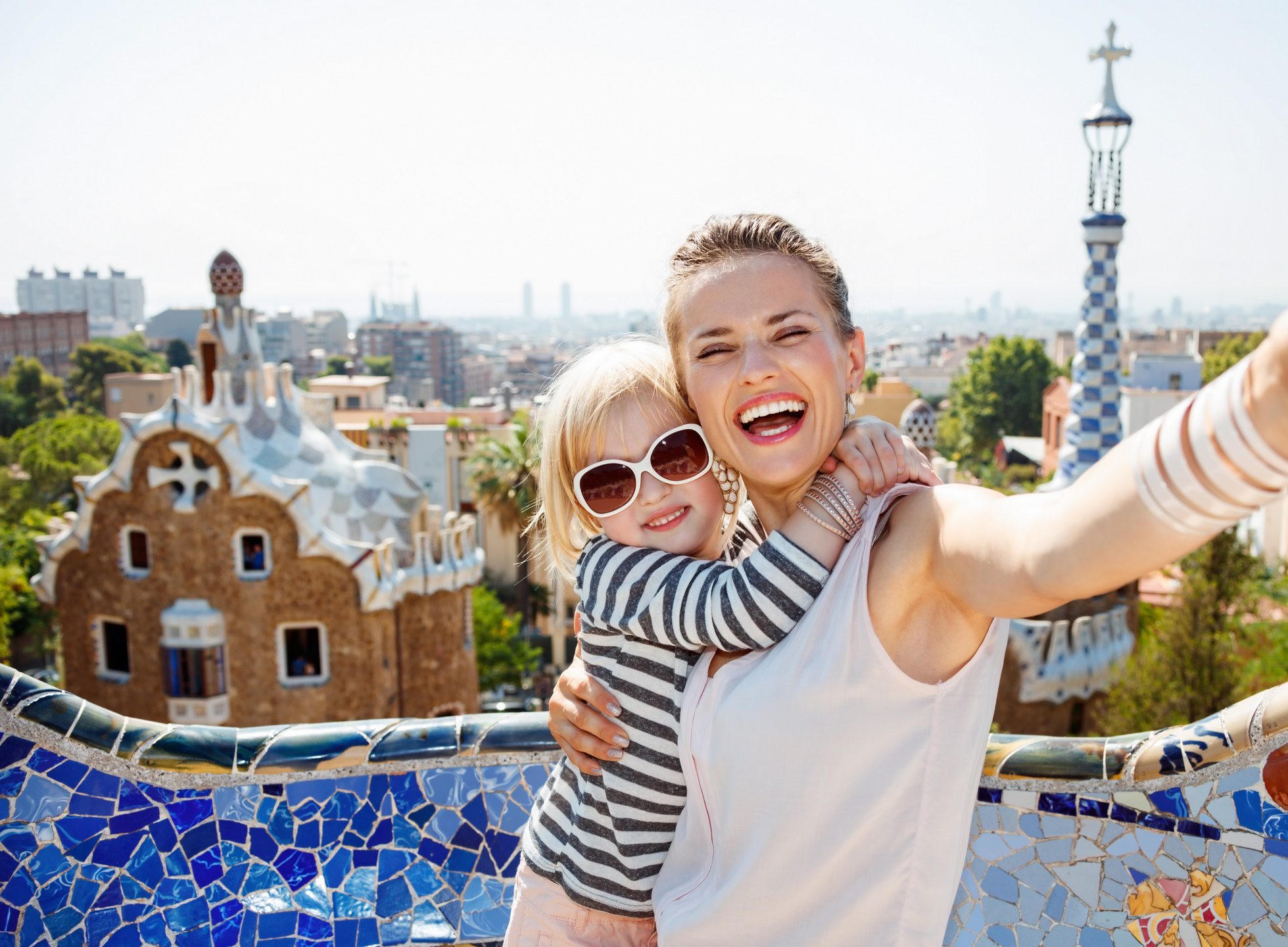
That evening, I joined my fellow travelers for our Welcome Dinner at a local restaurant. There were sixteen of us—a mix of couples, solo travelers, and one mother-daughter duo from Canada—gathered around a long table laden with pan con tomate and glasses of cava. Our Travel Director, a Catalan woman named Marta with eyes that crinkled when she laughed, raised her glass.
“Tonight,” she said, “we eat. Tomorrow, we begin. But remember: in Spain, beginning slowly is the only way to begin at all.”
I didn’t know it yet, but those words would become the compass for the journey ahead.
Barcelona from Every Angle
Morning broke clear and golden over the city. After breakfast, we boarded our coach for the city tour—but this was no ordinary drive-by sightseeing. Marta guided us through the grid of modernist wonders, pointing out Casa Batlló’s skeletal facade and La Pedrera’s undulating stone, but she also left space. Space to simply look. Space to let the buildings speak for themselves.
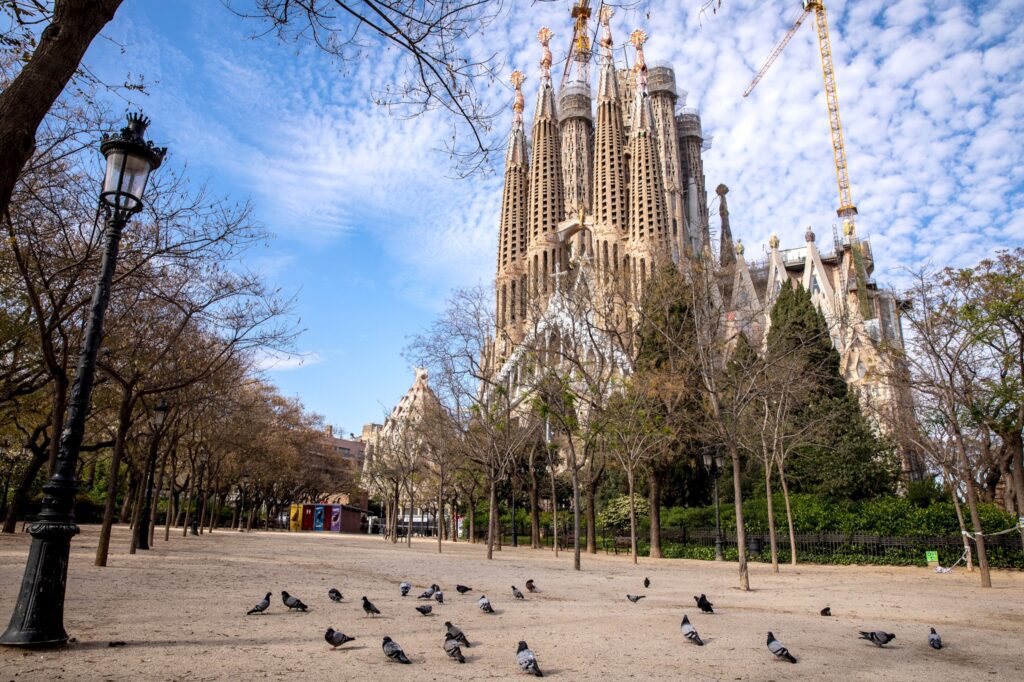
The Sagrada Familia stopped me cold. I had seen photographs, of course—everyone has. But photographs cannot prepare you for the way light filters through those stained glass windows, turning the interior into something between cathedral and forest, stone trees branching toward a canopy of color. Our guide explained Gaudi’s genius, his fusion of geometry and faith, but I found myself drifting, just watching the light move across a pillar as the morning advanced.
Then came the catamaran. From Port Vell, we sailed along Barcelona’s coastline, the city receding behind us as the Mediterranean opened ahead. The crew welcomed us with cava and a plate of local tapas—simple, perfect—and I lay back on the forward nets, feeling the sun on my face and the spray on my skin. This, I thought, is what they mean by perspective. Not just seeing a city, but seeing it from every angle, letting it reveal itself slowly.
The afternoon stretched open and empty—gloriously, intentionally empty. Some in our group rushed off to the Picasso Museum or the Gothic Quarter. I found a café in Gràcia, ordered a café con leche, and watched Barcelona happen around me for two hours. An elderly couple argued gently over a newspaper. A young mother pushed a stroller past, her baby reaching for passing tree branches. A waiter balanced plates with the easy grace of long practice. Nothing extraordinary. Everything extraordinary.
The Road to Valencia, with a Detour Through Time
Morning brought the first real journey of our trip, south along the Costa Dorada toward Valencia. But first: Peñíscola.
The town rises from the coast like a mirage, a white-washed medieval fortress perched on a rocky headland, surrounded by turquoise water. Game of Thrones filmed here—the city of Meereen, if you’re keeping track—but Peñíscola needs no fictional pedigree. Its narrow streets wind upward toward the Templar castle, each turn offering another view of sea and sky.
We had two hours. It felt like enough and not nearly enough—the slow travel paradox, I would come to learn. You trade breadth for depth, but you also accept that some places will only ever be glimpses. The art lies in making each glimpse count.
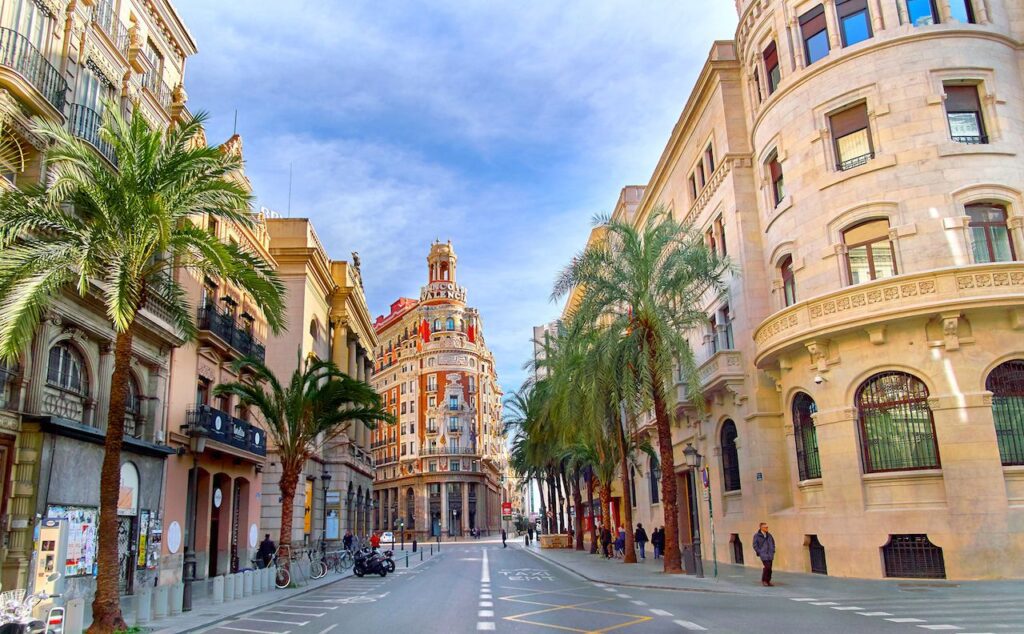
Then onward to Valencia, where the old and new collide in spectacular fashion. The City of Arts and Sciences rose before us like something from science fiction—Santiago Calatrava’s white curves and geometric daring, a complex of museums and aquariums and performance spaces that seems to float above reflecting pools.
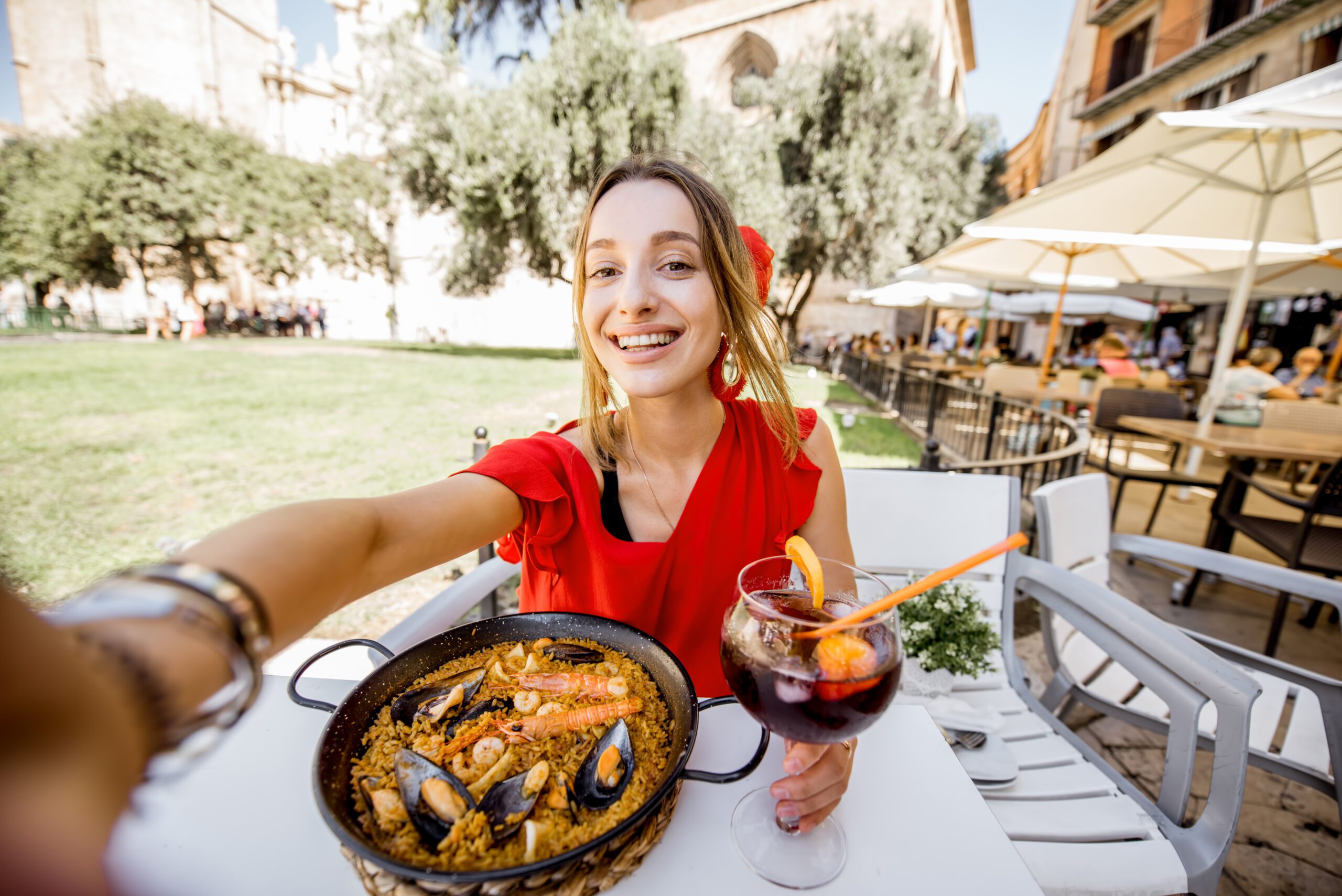
But Valencia saved its deepest magic for the old town. That evening, wandering alone through the narrow streets of the Carmen district, I discovered a tiny plaza where children played football while their parents shared wine at outdoor tables. I sat on a stone step and watched until the light failed entirely, then found a tapas bar and pointed at things I couldn’t name. They arrived on small plates—anchovies glistening with oil, potatoes draped in spicy brava sauce, some kind of fried fish I still can’t identify—and each bite tasted like discovery.
Flamenco and the Grammar of Passion
The drive to Granada carried us through landscapes that shifted like scenes in a film—olive groves giving way to mountains, white villages clinging to hillsides, the Sierra Nevada rising purple on the horizon. We arrived in the afternoon, just as the city was shaking off its siesta quiet.
Granada sits at the foot of the mountains, cradled by the Darro and Genil rivers, and it holds its history close. The Alhambra broods on its hilltop, the Nasrid palaces and Generalife gardens testifying to centuries of Moorish rule. But we would save that for morning. Tonight was for flamenco.
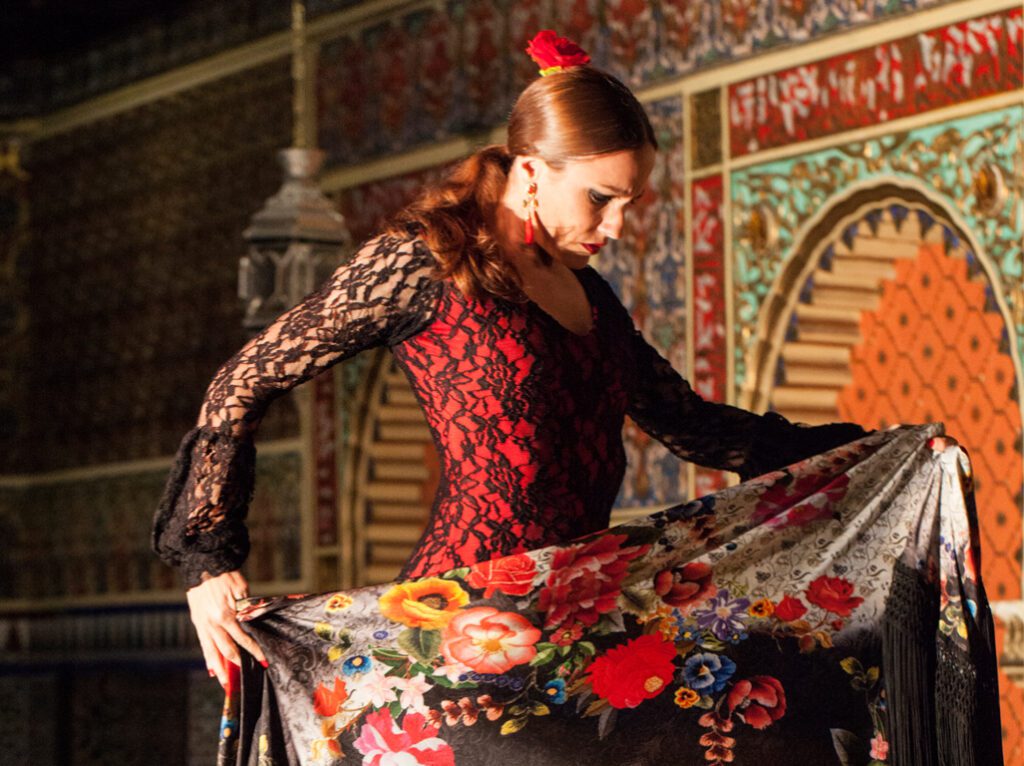
We gathered at a traditional venue in the Albayzín quarter, the old Moorish neighborhood that climbs the hill opposite the Alhambra. Before the show, we learned to dance—or tried to, at least. A flamenco teacher guided us through the basic steps, the intricate footwork, the posture that seems to defy physics. I was terrible. We all were. But somewhere between the stomping and the laughter, I understood something: flamenco isn’t just performance. It’s grammar. It’s how Andalusians express what words cannot hold.
The show that followed proved it. The guitarist’s fingers flew across strings, the singer’s voice cracked with something between joy and grief, and the dancer—a woman in a crimson dress—became pure emotion translated into movement. When she finished, the silence before applause felt like prayer.
Afterward, Marta led us to a mirador—one of Granada’s famous viewpoints—where the Alhambra glowed gold against the night sky. “This is why we come here,” she said quietly. “Not just to see, but to feel. To stand in a place and let it stand in you.”
The Alhambra and the Architecture of Wonder
Morning broke clear and cool as we climbed toward the Alhambra. Even arriving early, even knowing what to expect, the palace complex stopped me cold. The Nasrid Palaces unfold like a series of revelations—courtyards opening into gardens, arches framing views of the city below, walls covered in intricate geometric patterns and flowing Arabic script. Water runs everywhere, channeled through ancient engineering into fountains and reflecting pools, cooling the air and soothing the spirit.
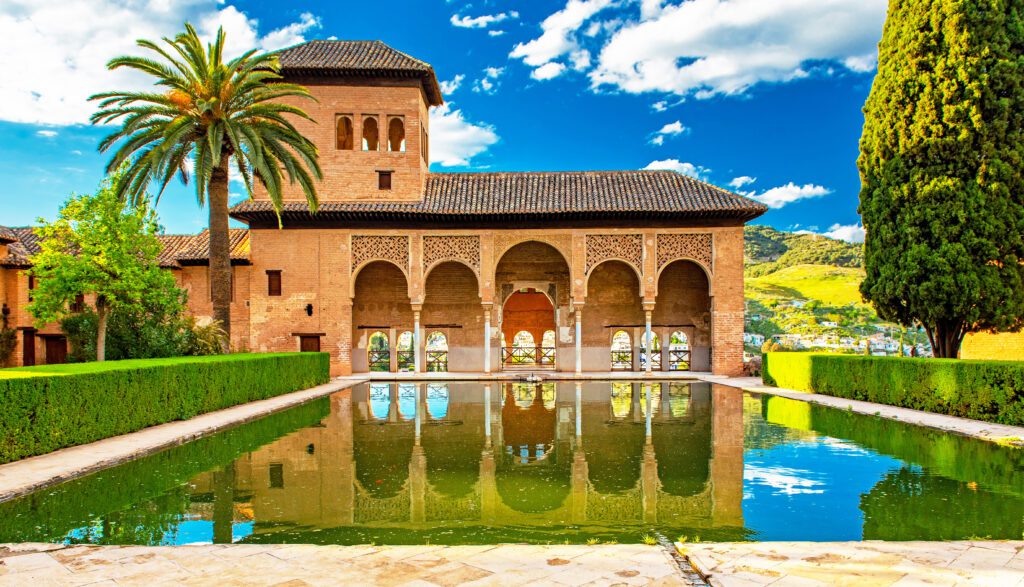
The Generalife gardens offered their own kind of paradise. I walked slowly—impossibly slowly—through hedges and flowerbeds, past hidden fountains and shaded benches, trying to absorb something of the people who had built this place, who had imagined paradise and then constructed it stone by stone.
By afternoon, we were back on the road, rolling through olive groves toward Seville. That evening, we shared another dinner together—more tapas, more wine, more laughter—and I realized that the group had begun to feel like something more than fellow travelers. We had become, in the space of five days, a temporary family.
Seville and the Seduction of Light
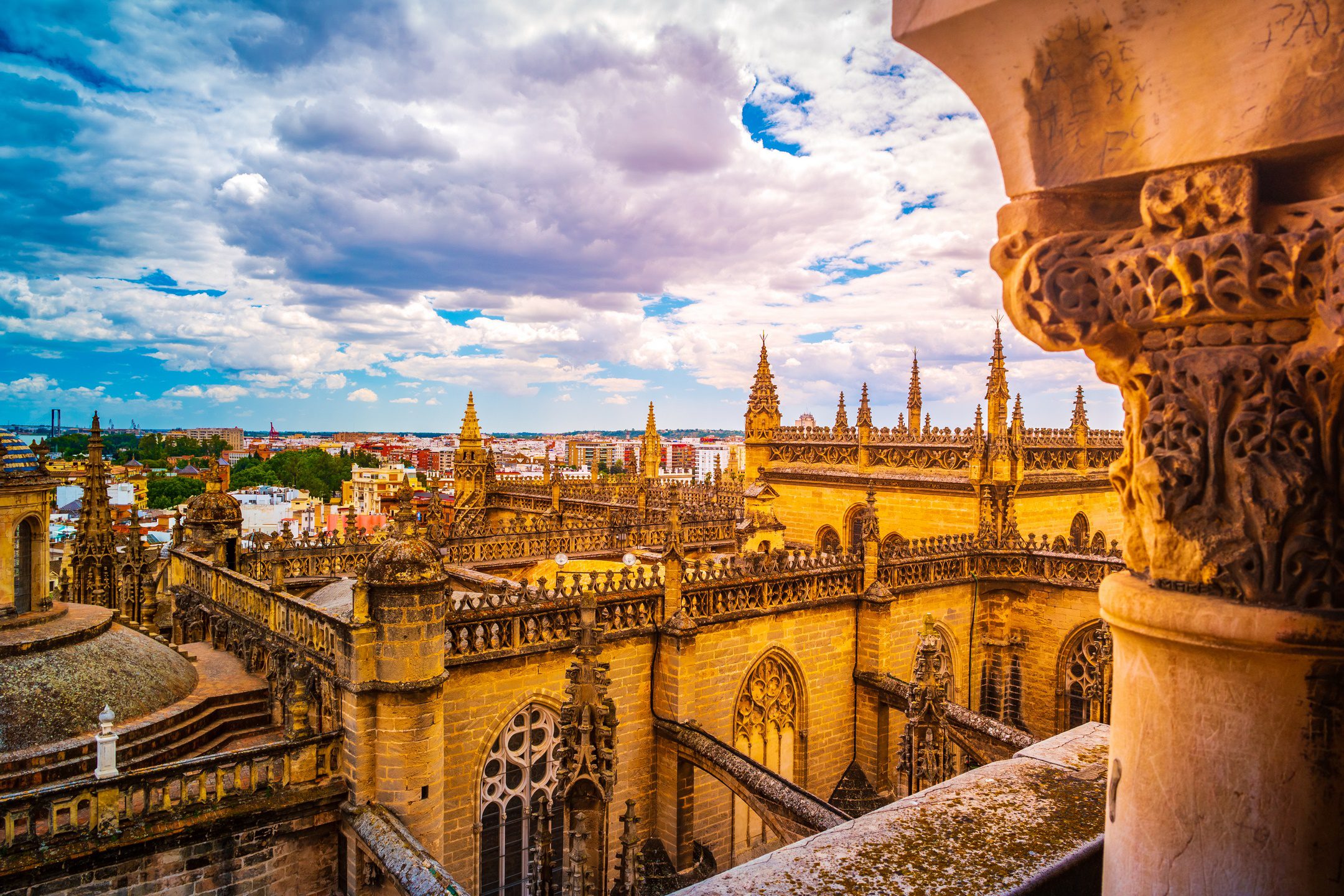
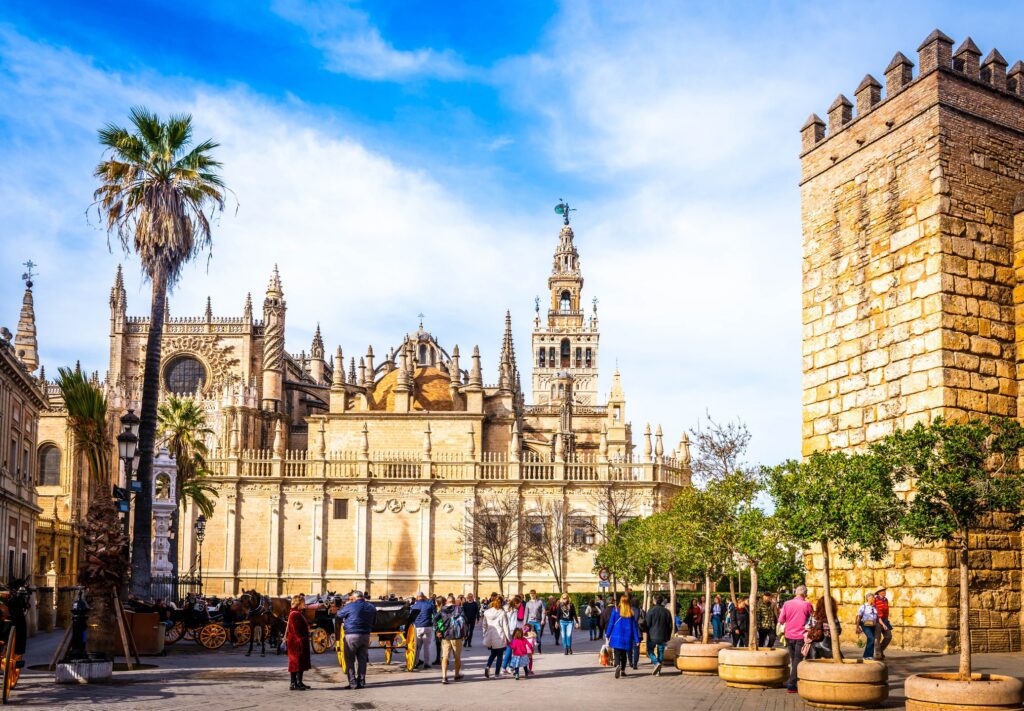
Seville greeted us with sunlight so golden it seemed filtered through honey. Our morning tour took us through the Cathedral—second largest in the Catholic world, home to Columbus’s tomb—and into the Santa Cruz quarter, where whitewashed walls and wrought-iron balconies create a labyrinth of beauty.
 But the afternoon belonged to the Plaza de España. I had seen photographs, of course. Everyone has. But photographs cannot prepare you for the actual experience of walking into that half-circle of Renaissance Revival grandeur, with its canal and bridges and ceramic tile alcoves representing each Spanish province. I spent hours there—not hours, exactly, but time measured in increments of wonder. I watched a flamenco performance by the water. I rented a rowboat and made a fool of myself trying to navigate. I sat on the steps and let the afternoon light perform its slow transformation from gold to rose to amber.
That evening, I found a tiny bar in the Santa Cruz quarter and ordered a glass of manzanilla. The bartender, an elderly man with kind eyes, asked where I was from. When I told him, he nodded slowly and said, “Seville is a city you marry, not a city you date.” I thought I understood what he meant.
Cordoba’s Mosque and the Journey to Madrid
Cordoba rose from the plain like a promise. The Mezquita—the Great Mosque—stands as one of the world’s most extraordinary buildings, a monument to religious coexistence and architectural genius. Built as a mosque in the 8th century, later converted to a cathedral, it contains multitudes: hundreds of striped arches, a forest of columns, a Renaissance nave inserted into the heart of Islamic prayer space.

I walked through the red-and-white arches slowly, letting the scale and complexity wash over me. Our guide explained the history—the expansion under successive caliphs, the Christian conquest, the controversial cathedral insertion—but I found myself drifting again, just watching light fall across ancient stone.
The Jewish Quarter, with its narrow streets and whitewashed walls, offered a quieter kind of beauty. I bought leather from a craftsman who had been working in the same shop for forty years. I drank orange juice at a plaza café. I tried to memorize the way bougainvillea spilled over walls.
Then Madrid. The landscape shifted as we drove—olive groves giving way to the plains of La Mancha, Don Quixote’s country, windmills haunting distant hills. We arrived in the capital as evening fell, the city lights spreading before us like scattered stars.
Madrid’s Rhythms and a Farewell Feast
Our final full day began with a city tour through Madrid’s layered history—the Habsburgs’ Plaza Mayor, the Bourbons’ Royal Palace, the fountains of Cibeles and Neptuno, the modern energy of Gran Vía and the Castellana. We paused for chocolate con churros at a classic Madrid chocolatería, thick hot chocolate and fried dough that tasted like childhood